Move more · Routine
Strength Training at Home: No Gym Needed
Eight easy moves, a chair, a wall and two water bottles. That is all you need.
HealthStylz Editors
· 4 min read
The short version
- Work your muscles at least 2 days a week.
- Use a chair, a wall and water bottles.
- Start with a few reps and build slowly.
Nutrition facts
Protein foods that help muscles recover. One normal serving of each.
Fiber per serving
- Chicken breast3 oz cooked (85 g)0 g
- Eggs1 large egg (50 g)0 g
- Greek yogurt1 container, 7 oz (200 g)0 g
- Lentils1/2 cup cooked (99 g)7.8 g
- Tofu1/2 cup (126 g)2.9 g
Protein per serving
- Chicken breast3 oz cooked (85 g)26.4 g
- Eggs1 large egg (50 g)6.3 g
- Greek yogurt1 container, 7 oz (200 g)19.9 g
- Lentils1/2 cup cooked (99 g)8.9 g
- Tofu1/2 cup (126 g)21.8 g
Calories per serving
- Chicken breast3 oz cooked (85 g)140.3 cal
- Eggs1 large egg (50 g)71.5 cal
- Greek yogurt1 container, 7 oz (200 g)146 cal
- Lentils1/2 cup cooked (99 g)114.8 cal
- Tofu1/2 cup (126 g)181.4 cal
Source: USDA FoodData Central.
Strong muscles help you carry groceries, lift kids, climb stairs and stay independent as you age. The good news is that you do not need a gym or fancy gear. Your body weight and a few things from the kitchen are enough.
How much do you need?
The CDC says adults need muscle-strengthening activity at least 2 days a week. Work all the big muscle groups: legs, hips, back, belly, chest, shoulders and arms. These sessions are in addition to your walking or other cardio, not in place of it. The NHS says strength sessions do not count toward your cardio minutes.
The CDC suggests 8 to 12 repetitions of an activity. One run of those reps is called a set. Do at least one set. For more benefit, do two or three sets. A good sign you worked hard enough is that it is hard to do another rep without help.
If you are new to this, the NHS suggests starting with fewer reps, such as 5. Then build up slowly. Your goal is to work toward the CDC range over time.
What counts at home
Between them, the CDC and NHS say these count as strength work:
- Body-weight exercises, such as push-ups and sit-ups
- Resistance bands
- Some yoga poses
- Digging in the garden
- Carrying heavy shopping bags
- Lifting and carrying children
So you may already be doing a little. The routine below makes it more complete.
Set up for success
- Use a solid chair with no wheels. Place it where it will not slide.
- Pick a free wall for the wall press-up.
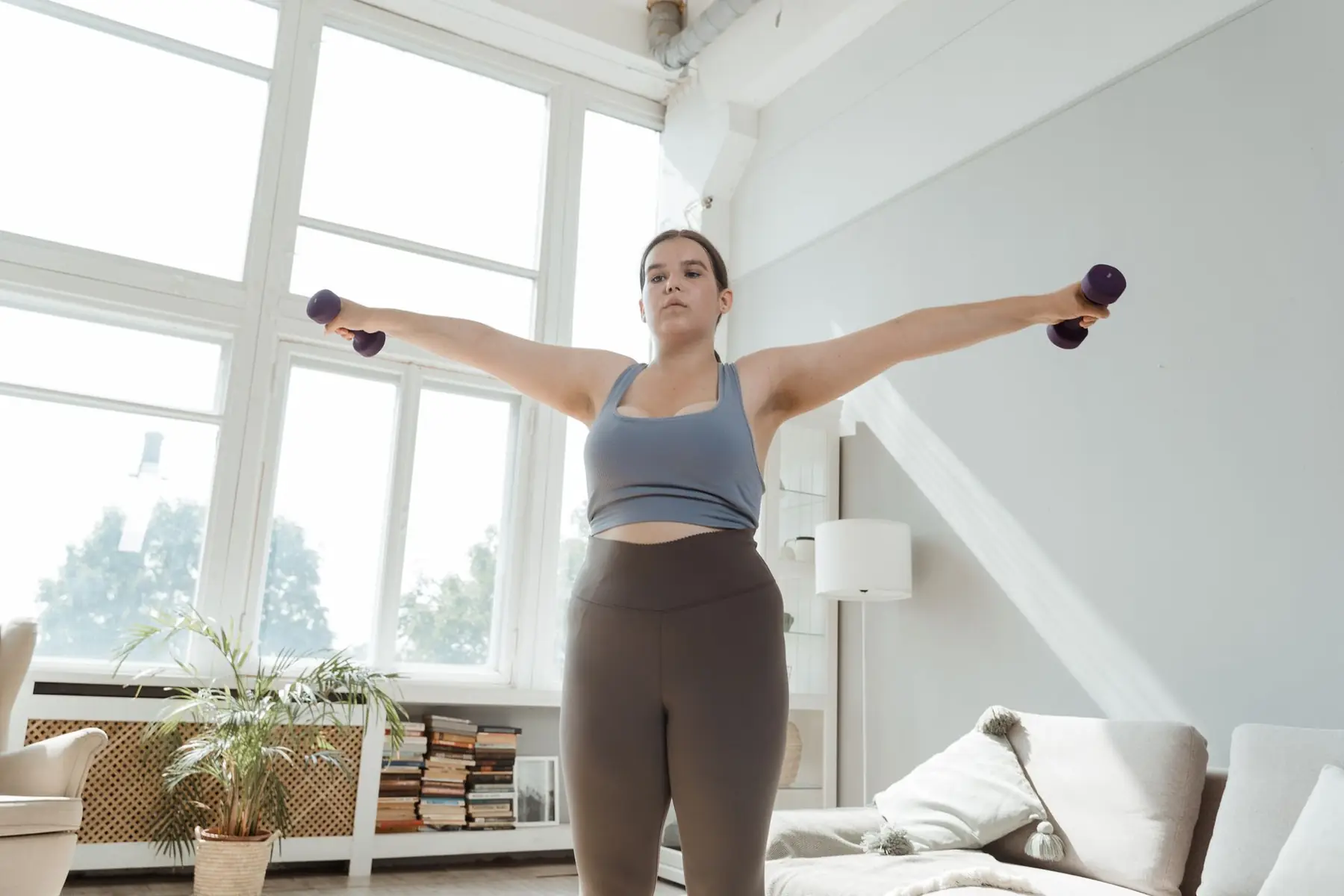
- Grab two filled water bottles as light weights.
- Wear loose, comfortable clothes and keep water nearby.
- Move slowly and with control. Rest if you need to.
A simple weekly plan
Pick two non-back-to-back days, like Monday and Thursday. Do each move once through for week one. Add a second round when it feels easy. Give yourself a day off in between.
New mom or new to exercise?
The NHS says strength training is part of staying active after pregnancy. It also says to wait until your 6 to 8 week postnatal check before you increase how hard you work. Ask your doctor what is right for you if you have pain or any health concern.
The NHS also says to see a doctor first if you have not exercised for a while or have a medical condition.
Keep it going
Tie your sessions to something you already do, like after the kids' bedtime or while a show is on. Pick a day and put it on the calendar. Celebrate small wins, like doing an extra rep or using a heavier bottle.
Make it harder, slowly
The NHS says to work until you need a short rest before you repeat a move. When a move gets easy, change one thing. Add a few reps. Do a second round. Try calf raises without holding the chair. The CDC says two or three sets bring more benefit than one. Change only one thing at a time so your body can adjust.
The moves
- Sit to stand 5 reps, build toward 8 to 12
Sit on the edge of a chair with feet hip-width apart. Lean slightly forward. Stand up using your legs, not your arms. Sit back down slowly.
- Mini squat 5 reps, build toward 8 to 12
Hold the back of the chair, feet hip-width apart. Bend your knees as far as is comfortable. Keep your knees pointing forward and your back straight. Rise while squeezing your bottom.
- Wall press-up 3 sets of 5 to 10 reps
Stand an arm's length from a wall with your hands flat on it at chest height. Keep your back straight and elbows close to your sides. Bend your arms to bring your chest toward the wall, then push back.
- Calf raise 5 reps
Hold the back of the chair. Slowly lift both heels off the floor, then lower with control. For a harder version, try it without holding on.
- Sideways leg lift 5 reps each leg
Hold the chair back. Raise one leg out to the side, keeping your back and hips straight. Do not tilt. Lower it and switch legs.
- Leg extension 5 reps each leg
Hold the chair back. Raise one straight leg behind you without arching your back. You should feel it in the back of your thigh and bottom. Hold up to 5 seconds, then switch.
- Bottle curl 3 sets of 5 curls each arm
Hold a filled water bottle in each hand with your arms by your sides. Bend your elbows to bring the bottles toward your shoulders. Lower them slowly. You can do this seated.
- Knee plank Hold as long as comfortable
Start on your hands and knees with your back straight. Draw your belly in and up. Keep your knees on the floor, or rest on your forearms to make it easier. Breathe steadily. Step your feet back into a full plank only when this feels easy.
Stop if anything hurts. If you have a health condition or are new to exercise, check with your doctor first.