Move more · Routine
Gentle Moves for a Sore Lower Back
Six easy moves you can do at home or at a kitchen counter. Go slow and stop if pain grows.
HealthStylz Editors
· 3 min read
The short version
- Gentle movement beats long bed rest for most sore backs.
- Never push through pain that gets worse.
- Give it a couple of weeks of steady practice.
Spine & Joint Health
Lower Back Decompression & Core Stability Profile
Gentle alignment and core bracing habits that relieve spinal pressure and protect daily mobility.
- Disc DecompressionReduced spinal pressure -40% disc load
- Deep Core EnduranceSpinal brace strength 84/100 tone
- Hip Flexor ReleasePelvic neutral alignment +25° extension
- Functional Daily ReachPain-free bending Comfort reach
Source: Spine Journal & North American Spine Society Guidelines.
A sore lower back can make simple things hard. Lifting a toddler. Putting on socks. Sitting through a long meeting. The good news is that gentle movement often helps.
Keep moving, but kindly
The NHS says to keep up your daily activities and stay as active as you can. It says lying in bed for long periods is not recommended. It also lists walking, swimming, yoga and pilates as things that may ease back pain. Gentle back exercises and stretches can help too. Stop if the pain gets worse.
How to use this routine
- Do it once or twice a day. Move slowly and breathe.
- Cleveland Clinic says not to push through pain that is getting worse.
- Give it a couple of weeks or more before you judge it. Steady practice matters.
- A physical therapist can tailor a plan to you.
Heat or ice
The NHS says an ice pack can help with pain and swelling. A heat pack or hot water bottle can help with stiffness and muscle spasms. Wrap either in a towel.
When to see a doctor
See your doctor if the pain does not get better after a few weeks of home care, or if it stops you from doing daily tasks. The NHS also says to see a doctor if the pain is worse at night, if you lost weight without trying, or if it gets worse when you cough or sneeze.
Get urgent help right away if you have pain, tingling, weakness or numbness in both legs, numbness around your private parts, new bladder or bowel problems, chest pain, or back pain after a serious accident. Cleveland Clinic also says to talk to a provider before stretching if your pain began after a fall or came with a cough, vomiting or other signs of illness. Tell your provider if pain shoots down a leg.
A two-week plan
- Days 1 to 3: Do the first three moves once a day. Take a short, easy walk.
- Days 4 to 7: Do all six moves once a day.
- Week 2: Do all six moves twice a day if they feel good. Keep walking.
The NHS says to keep up your usual activities. If pain is no better after a few weeks of home care, see your doctor.
Your meals can help too
A healthy weight and a varied diet are good for backs and bones. The foods below are simple choices for strong muscles and bones.
The moves
- Lying knee drop 2 minutes
Lie on your back with knees bent and feet flat. Slowly lower both knees to one side. Keep your shoulders down. Hold for 5 to 10 seconds. Return to the middle and switch sides. Do 3 to 5 per side.
- Counter cat-cow 1 minute
Stand and rest both hands on a counter with straight arms. Round your back and drop your head. Then lift your chest and head and draw your shoulders back. Flow gently between the two 3 to 5 times.
- Side reach 1 minute
Stand with feet hip-width apart and arms overhead. Reach up and over to one side. Keep your hips level. Hold for 3 to 5 seconds. Do 3 to 5 per side.
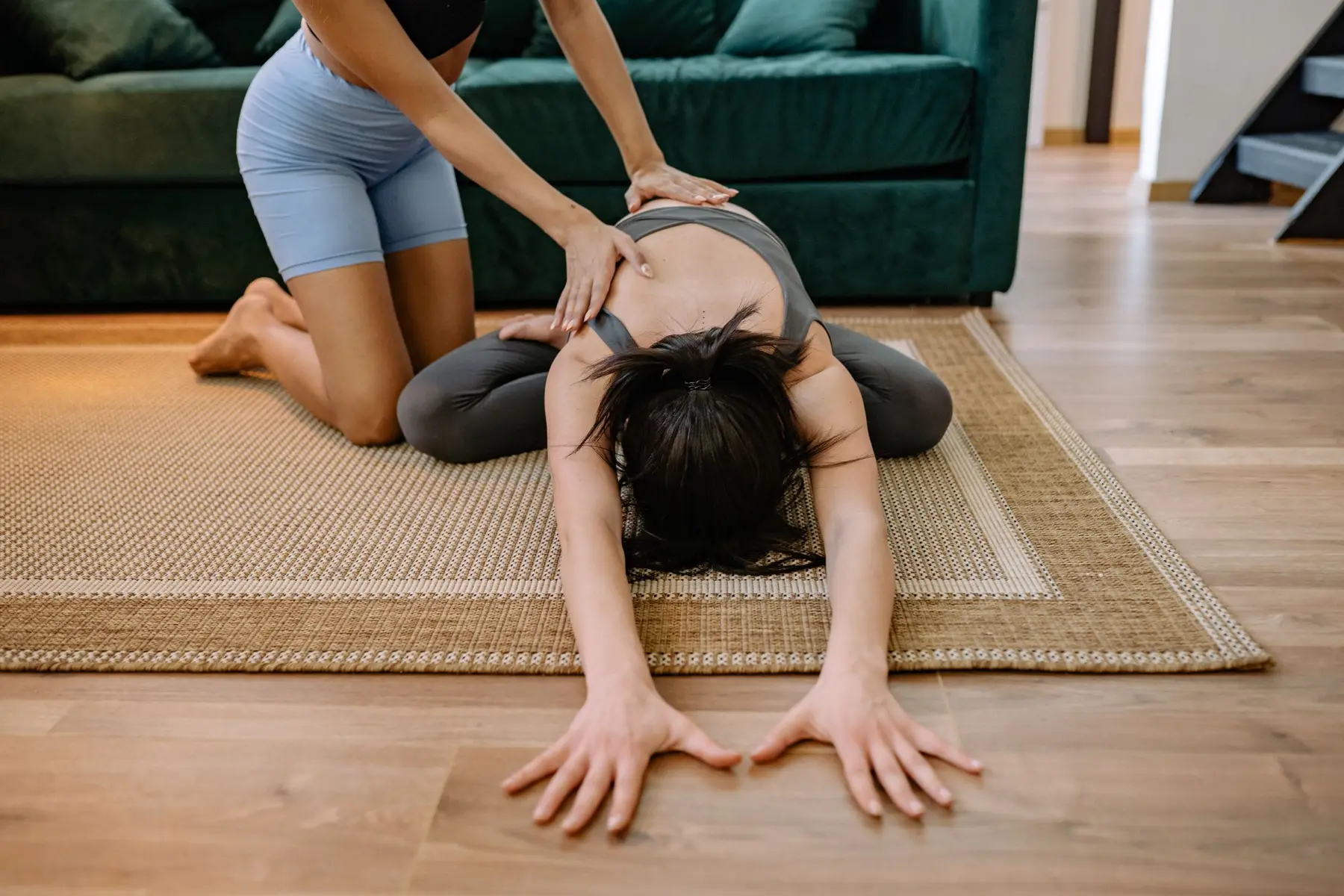
- Child's pose 30 seconds
On hands and knees, sit your hips back toward your heels and reach your arms forward. Hold for 10 to 30 seconds. If the floor is hard, rest your hands on a counter and hinge at the hips with a flat back for 5 to 10 seconds.
- Seated hamstring stretch 2 minutes
Sit tall on a firm chair. Straighten one leg. Lean your chest toward the knee with a straight back. Hold for 10 seconds. Do 3 to 5 per leg.
- Small bridge 1 minute
Lie on your back with knees bent and feet flat. Slowly lift your hips by squeezing your seat muscles. Do not go too high. Hold for 3 to 5 seconds, lower, and rest for a few seconds. Do about 5.
Stop if anything hurts. If you have a health condition or are new to exercise, check with your doctor first.