Product review · Supplement · Brand of the week
Mountain Rose Herbs Elderberry Syrup Review: Product Breakdown
A product breakdown of Mountain Rose Herbs' four-ingredient organic elderberry syrup, with dosage, DIY comparison and pros and cons.
5of 10checks confirmed~$4.12 / fl oz
Our verdict
The review rates the syrup 4.9 out of 5 and calls it the cleanest commercially prepared elderberry formulation. It credits a four-ingredient recipe of elderberries, raw honey, organic cane alcohol and distilled water, with no corn syrup or chemical preservatives. It notes the syrup contains raw honey and alcohol, costs more per ounce than supermarket syrups, and says a DIY batch from the brand's dried berries costs far less per ounce.
Best forReaders who want a short-ingredient, organic elderberry syrup for travel, desks and seasonal care, or those who would rather brew their own from bulk dried berries.
Skip it ifInfants under 1 year of age because of the raw honey, and strict alcohol avoiders unless the syrup is diluted in warm tea.
What we liked
- Four ingredients: raw honey, Sambucus nigra berries, organic cane alcohol and distilled water
- Certified Oregon Tilth organic and Non-GMO Project Verified
- No corn syrup, refined sugar, synthetic dyes or chemical binders
- Amber glass bottle to shield antioxidants from UV light
- Stays fresh for 3 to 6 months in the fridge after opening, per the page
Trade-offs
- –Contains raw honey, which the page says is strictly forbidden for infants under 1 year
- –Contains organic cane alcohol at about 12 to 16 percent ABV
- –About $4.12 per fl oz, against about $0.85 for a DIY batch from bulk berries
- –Must be kept in the refrigerator after opening
Buyer's checklist
5 of 10 confirmed in our review
The same ten questions for every product. A filled circle means our review confirmed it. "Not stated" or "Partly stated" means the details are missing, so check them on the brand's site before you buy.
- Full ingredient list shownfour pure ingredientsYes
- Amounts or doses stated1 teaspoon (5 ml) once dailyYes
- Third-party lab testing mentionedverified through HPLC and spectrophotometric testingPartly stated
- Independent studies or sources citedA 2021 botanical adulteration studyPartly stated
- Price stated~$4.12 / fl ozYes
- Money-back or satisfaction guaranteeNot stated
- Can buy without a subscriptionNot stated
- Allergen or dietary info givenStrictly forbidden for infants under 1 year of ageYes
- Where it is made or sourcedHandcrafted in Eugene, OregonYes
- Shipping and returns explainedNot stated
What is in the bottle
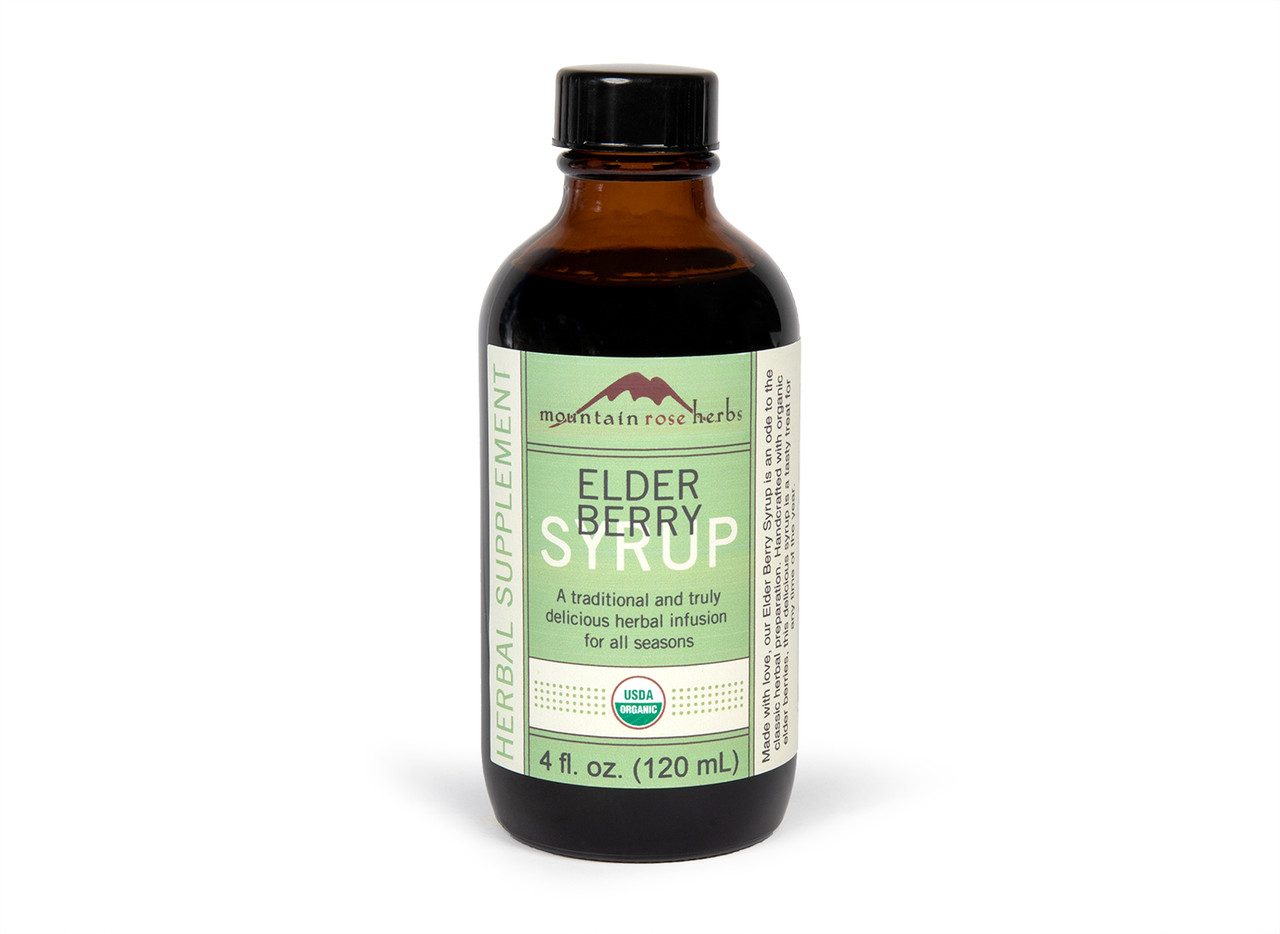
The page contrasts grocery brands that use glucose syrup, synthetic berry flavoring and potassium sorbate with Mountain Rose Herbs, which it says handcrafts its elderberry syrup from just four ingredients: unheated raw honey, European Sambucus nigra berries, certified organic cane alcohol and pure distilled water. The 4 fl oz bottle is described as handcrafted in Eugene, Oregon.
The editorial verdict is that this is the cleanest commercially prepared elderberry formulation on the market, rated 4.9 out of 5. The page says the recipe preserves anthocyanin and flavonoid content without the sugar crash or gut irritation it links to high-fructose corn syrup alternatives.
Why quality matters in elderberry
The page says elderberry went from a niche European folk remedy to a multi-hundred-million-dollar industry, and that rapid growth diluted quality. It cites a 2021 botanical adulteration study reporting that over 14 percent of commercial elderberry products tested contained little to no elderberry, with cheap black rice extract, chokeberry or dyed gelatin as substitutes. The page does not name the study. It also says many commercial syrups list glucose syrup or fructose first, with as much as 10 grams of refined sugar per tablespoon.
It describes the process in two steps: whole European organic elderberries slow-simmered in distilled spring water, then triple-filtered and pressed to keep anthocyanin density.
The four ingredients
- Organic elder berries (Sambucus nigra): sourced from certified organic European growers, rich in anthocyanins, quercetin and rutin, according to the page. It says mass-market brands use low-potency powders or diluted extracts.
- Raw unheated honey: Pacific Northwest wildflower honey, described as a soothing throat demulcent with natural antimicrobial properties.
- Certified organic alcohol: organic cane alcohol at approximately 12 to 16 percent ABV, used as a traditional stabilizer and natural shelf-life protector.
- Distilled water: used for the gentle low-heat simmering of the berries.
Pre-made bottle against DIY
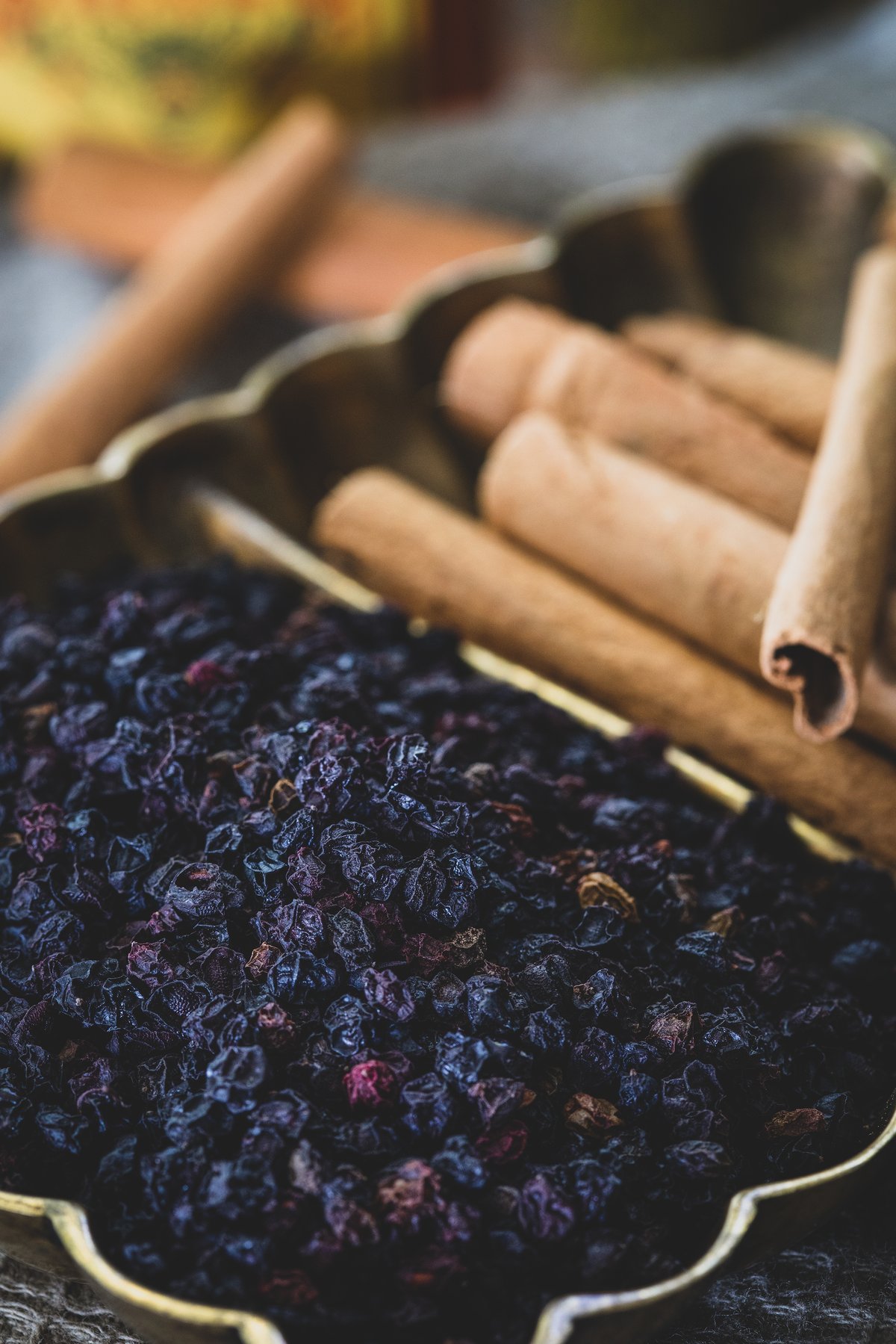
Mountain Rose Herbs also sells certified organic dried European elderberries to home herbalists. The page compares the pre-made 4 oz syrup, a DIY batch from 1 lb of bulk berries and a standard pharmacy brand.
- Organic certification: both Mountain Rose options are USDA and Oregon Tilth organic. The pharmacy brand is conventional.
- Sweetener: raw wildflower honey for the pre-made syrup. Your choice for DIY. Glucose syrup for the pharmacy brand.
- Preservation: alcohol and raw honey for the bottle. Refrigeration only for DIY, consumed within 3 weeks. Potassium sorbate and sodium benzoate for the pharmacy brand.
- Preparation: 0 minutes for the bottle, 45 minutes for DIY.
- Cost per ounce: about $4.12 for the bottle, about $0.85 for DIY and about $3.75 for the pharmacy brand.
- Best for: travel, desks and immediate seasonal care for the bottle. Large families, custom spice blends and budget for DIY.
Taste and daily protocol
The page says commercial syrups often taste like cloying purple candy. It describes this syrup as having a deep, earthy dark berry aroma with a floral note, a smooth medium-viscosity mouthfeel without xanthan or pectin thickeners, and a pleasantly tart flavor balanced by raw honey.
Suggested dosage
- Maintenance: 1 teaspoon (5 ml) once daily during autumn and winter, or during high-density air travel.
- Acute seasonal need: 1 teaspoon 3 to 4 times daily at the first sign of throat tickle or immune fatigue.
- Culinary use: drizzle 1 teaspoon into warm sparkling water, lemon herbal tea or a chia seed bowl.
Pros and cons
What the reviewers like
- Only whole organic berries, raw honey, organic alcohol and water.
- High anthocyanin content, which the page says was verified through HPLC and spectrophotometric testing.
- Oregon Tilth Certified Organic and Non-GMO Project Verified.
- No corn syrup, refined sugar, synthetic dyes or chemical binders.
- Amber glass packaging against UV degradation.
Points to consider
- It contains raw honey, which is strictly forbidden for infants under 1 year of age.
- It contains traditional organic cane alcohol, not ideal for strict alcohol avoiders unless diluted in warm tea.
- The upfront price per bottle is higher than mass-produced supermarket syrups.
Frequently asked questions
Why is there alcohol in the syrup? The page says alcohol extracts deeper lipophilic constituents from the berries than water alone and naturally inhibits bacteria and mold without chemical preservatives.
What about an alcohol-free version for small kids? The page suggests brewing from bulk dried organic elderberries using its 45-minute stovetop recipe with water and raw local honey, or adding the pre-made syrup to steaming tea so the trace alcohol evaporates.
How long does a bottle last after opening? Keep it sealed in the refrigerator. The page says it keeps its flavor and potency for 3 to 6 months.
Product fast facts
- Botanical name: Sambucus nigra. Form: liquid herbal syrup.
- Volume: 4 fl oz (118 ml). Packaging: amber glass bottle.
- Certification: Oregon Tilth and USDA organic. Facility: TRUE Zero Waste Platinum.
- Preservative: raw honey and cane alcohol. Origin: Eugene, Oregon, USA.
What the page does not show
The page does not give a bottle price, only a per-ounce estimate, and it does not name the lab behind its HPLC claim or the adulteration study.