Move more · Routine
Pilates for Beginners at Home
Six slow mat moves for your core, back and balance. All you need is a towel or mat.
HealthStylz Editors
· 3 min read
The short version
- Pilates uses slow, controlled moves and steady breathing.
- Start slowly and build up. Some soreness is normal.
- Pair it with walking or other cardio each week.
Movement & Vitality
Movement & Cardiovascular Vitality
How gentle, regular physical activity supports heart strength, joints, and daily stamina.
- Daily Activity GoalCDC baseline target 25 to 30 min
- Post-Meal Glucose UptakeBlood sugar clearing -22% spike
- Functional Joint MobilitySmooth range of motion 90/100
- Mood & Energy ElevationEndorphin release 3.5 hrs
Source: American Heart Association & CDC Physical Activity Guidelines.
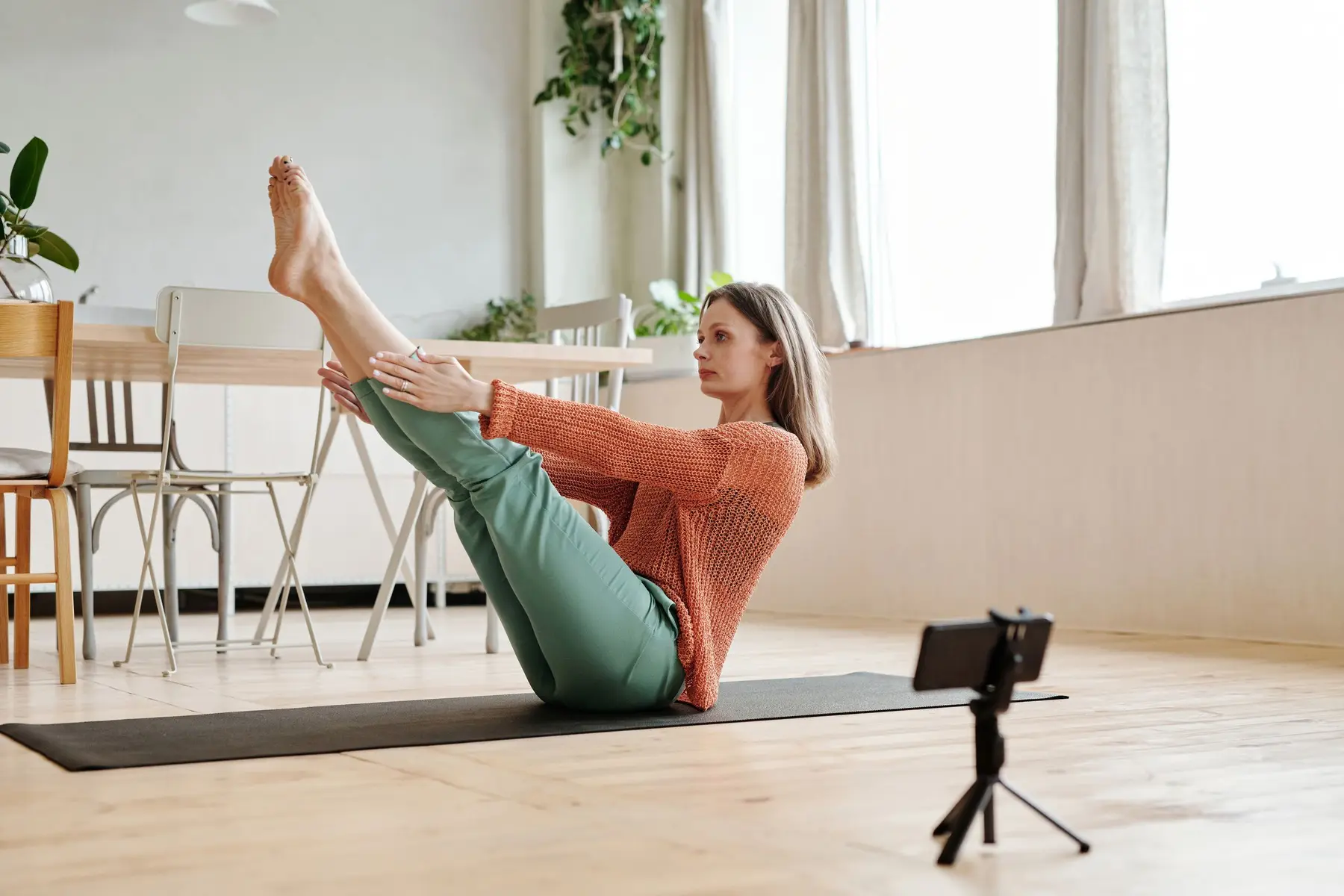
Pilates is a gentle kind of exercise. It focuses on slow, careful moves and steady breathing. You can do it on a mat at home. You do not need fancy gear.
What it is
Cleveland Clinic describes Pilates as exercise that stresses focus on each move, flowing motion and controlled breathing. It works the muscles of your core. Your core is more than your belly. It also includes your sides, lower back, hips and seat. It builds tone and endurance more than bulk.
What it may help with
- Core strength and better posture
- Flexibility and body awareness
- Balance and coordination, which may lower the chance of falls
- Lower back comfort
Cleveland Clinic adds that the research is promising but mostly small and short. So think of Pilates as one good tool, not a cure.
How often
Cleveland Clinic says three to five times a week is great. Pilates raises your heart rate a little but is not a full cardio workout. Add brisk walking, biking or swimming. Add some strength work for your arms and shoulders too.
Tips for your first weeks
- Start slowly. Build up bit by bit.
- A little soreness is normal as your body learns new moves. Pain is not.
- Breathe on purpose. Breathe out on the hard part of each move.
- Try a mat on carpet or a rug, or a folded towel on a hard floor.
- If you use a video, pick a qualified teacher. Cleveland Clinic notes there is no license requirement, so check their training.
Mat or machine?
Cleveland Clinic says neither is easier. Mat work uses gravity as resistance. Free mat Pilates can be harder on the back than reformer work. A reformer is the machine used in many studios. Many studios use both.
A three-week start
- Week 1: Do the first three moves on 3 days.
- Week 2: Do all six moves on 3 days.
- Week 3: Add a second round, or go for 4 days.
The NHS lists pilates among activities that may ease back pain. Cleveland Clinic says class bundles and packages can make studio classes cheaper, if you want to try one later.
Safety
Check with your doctor first if you have a health condition, an injury, back pain that does not go away, or recent surgery. Cleveland Clinic says starting too early after surgery can make things worse. Stop if a move hurts.
The moves
- Pelvic tilt 1 minute
Lie on your back with knees bent and feet flat. Breathe in. As you breathe out, gently press your lower back toward the floor and tip your hips up a little. Breathe in and release. Do 8 slow tilts.
- Knee fold 2 minutes
Stay on your back with a neutral spine. Breathe out and lift one foot so the knee is above the hip. Lower it with control. Switch legs. Do 6 per leg. Keep your belly gently drawn in.
- Bridge 2 minutes
Lie on your back with knees bent. Breathe out and lift your hips by squeezing your seat. Keep your ribs soft. Hold for 2 breaths, then roll down slowly. Do 6.
- Side-lying leg lift 3 minutes
Lie on your side with your hips stacked and knees slightly bent. Lift the top leg to hip height and lower it slowly. Do 8, then switch sides.
- Bird dog 2 minutes
Start on hands and knees. Reach one arm forward and the opposite leg back while keeping your hips level. Hold for 2 breaths. Switch sides. Do 5 per side.
- Child's pose rest 1 minute
Sit your hips back toward your heels and reach your arms forward. Rest your forehead down. Take 5 slow breaths.
Stop if anything hurts. If you have a health condition or are new to exercise, check with your doctor first.