Mind & sleep · Tips
Morning Light for Better Sleep
Good sleep can start at sunrise. A few minutes outside after you wake may help set your body clock.
HealthStylz Editors
· 3 min read
The short version
- Light is a strong signal for your body clock.
- Step outside soon after waking, even on cloudy days.
- Keep evenings dim and wake times steady.
As of Jul 10, 2026: Light exposure and sleep architecture in real-world settings (npj Biological Timing and Sleep)
Circadian Alignment
Circadian Morning Light & Energy Profile
Early morning daylight sets your 24-hour biological clock for sharp daytime energy and sound sleep.
- Cortisol Awakening ResponseNatural wakefulness cue Sharp peak
- Nighttime Melatonin AnchorEvening sleep timing Anchored timer
- Daytime Serotonin BoostMood & vitality cue +30% daytime
- Lux Intensity ContrastFull spectrum illumination 10,000+ lux
Source: Current Biology & Stanford Sleep & Circadian Neurobiology.
We usually think about sleep at night. But your body clock gets its cues during the day. One of the strongest cues is light. Here is how to use it.
How light sets your body clock
Your body has an inner clock. It tells you when to feel alert and when to feel sleepy. The NIH's heart, lung and blood institute (NHLBI) calls light "the strongest signal in the environment" for resetting your sleep-wake cycle. Cleveland Clinic explains that morning light tells your brain to stop making melatonin, the sleepy hormone. Darkness tells it to get ready for sleep.
NHLBI says you may need more sunlight in the day and less artificial light at night. That includes TV and phone screens, which can lower melatonin and make it harder to fall asleep.
What a new study says
In July 2026, researchers in the UK published a study of 89 adults. They wore light sensors and sleep trackers for 7 days. People who got longer daytime light and a steadier light pattern across the week tended to go to bed and wake earlier. Steadier light was also linked to deeper sleep early in the night.
This was a small study that shows a link. It does not prove that light caused better sleep. But it matches what sleep experts already suggest.
Easy ways to get morning light
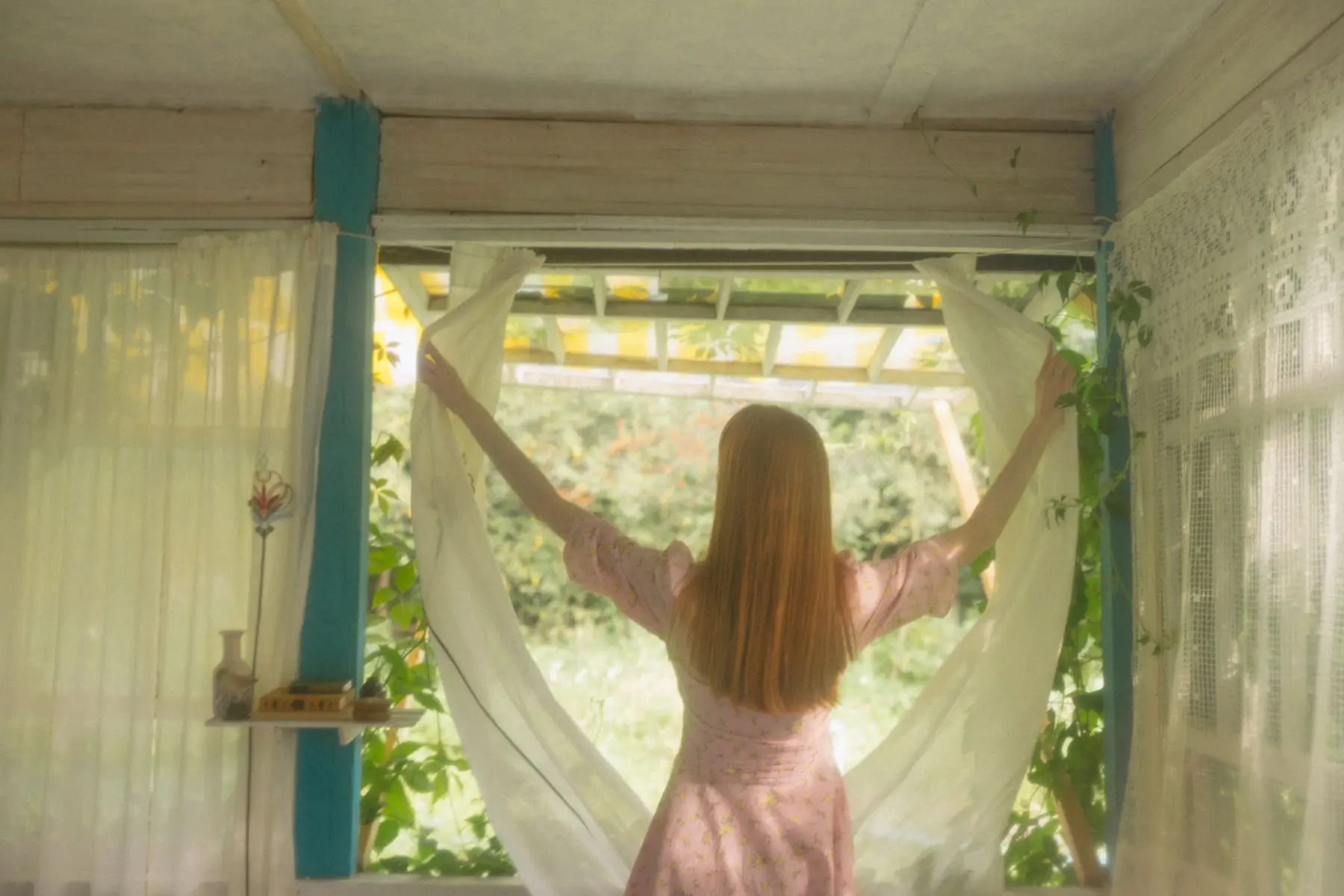
- Open the curtains first thing. It costs nothing and takes ten seconds.
- Drink your coffee or tea by a window or on the step. You get light while you do something you already do.
- Walk outside. Take the dog out, walk the kids to the bus stop or stroll around the block. Outdoor time is a double win: light plus movement.
- Eat breakfast outside when the weather is nice. Oatmeal and a banana taste better in the sun.
- Go out on cloudy days too. A short walk still gets you outside and moving.
There is no magic number of minutes. Cleveland Clinic says sun exposure varies with the place, season and time of day. Start with whatever you can do and see how you feel.
Keep the rest of your day in step
- Wake up at the same time each day. NHLBI recommends a daily routine and steady sleep and wake times.
- Dim the lights at night. NHLBI says dim lighting before bed may help.
- Move your body in the day. Avoid hard exercise close to bedtime.
- Skip long afternoon naps. NHLBI says to avoid daytime naps, especially in the afternoon.
- Limit caffeine and alcohol near bedtime.
Sun safety
Cleveland Clinic says to avoid the strong midday sun, wear sunscreen and practice moderation. UV rays can damage skin. Early morning outdoor time is gentle, but protect your skin if you will be out longer.
When to see a doctor
If you keep falling asleep much later or waking much earlier than you want, or you feel tired no matter what you do, see your doctor. NHLBI notes that some people have body clock disorders that a sleep specialist can treat. Light boxes are used for some of these problems, so ask a professional before trying one.