Family · Tips
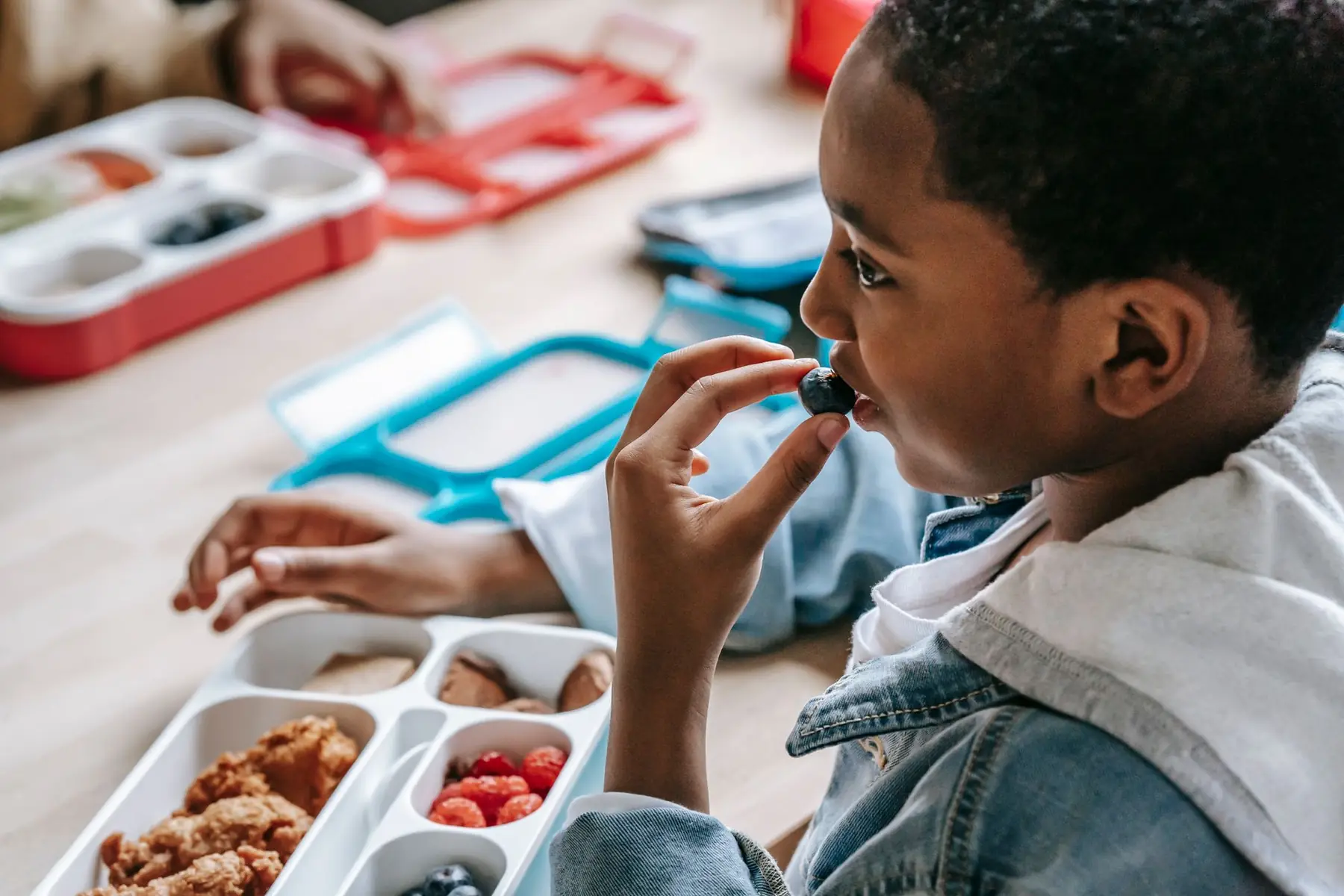
A Lunchbox Plan Kids Actually Eat
Five simple parts, a little choice for your child, and a lunch that comes home empty.
HealthStylz Editors
· 3 min read
The short version
- Pack five parts: starch, protein, fruit or veg, dairy, water.
- Let your child choose from each group.
- Use an ice pack to keep lunch cold.
Nutrition facts
Easy lunchbox staples. One normal serving of each.
Fiber per serving
- Apple1 medium (182 g)4.4 g
- Cheddar1 slice, 1 oz (28 g)0 g
- Hummus2 tbsp (30 g)1.7 g
- Carrots1 cup chopped (128 g)3.6 g
- Whole wheat bread1 slice (32 g)1.9 g
Protein per serving
- Apple1 medium (182 g)0.5 g
- Cheddar1 slice, 1 oz (28 g)6.4 g
- Hummus2 tbsp (30 g)2.3 g
- Carrots1 cup chopped (128 g)1.2 g
- Whole wheat bread1 slice (32 g)4 g
Calories per serving
- Apple1 medium (182 g)94.6 cal
- Cheddar1 slice, 1 oz (28 g)112.8 cal
- Hummus2 tbsp (30 g)71.1 cal
- Carrots1 cup chopped (128 g)52.5 cal
- Whole wheat bread1 slice (32 g)80.6 cal
Source: USDA FoodData Central.
You pack a nice lunch. It comes home untouched. Almost every parent has been there. The fix is not a fancier lunch. It is a simple plan that you can repeat, with a little say for your child.
The five-part lunchbox
The NHS gives an easy way to build a lunchbox. Pick something from each group.
- Starchy food: bread, a wrap, pitta, pasta or rice. Whole grain is the better pick. The NHS notes that carbohydrates help keep us full for longer.
- Protein: eggs, tuna or salmon, chicken, lean meat, or beans. Protein helps kids grow and repair their bodies.
- Fruit and veg: aim for two items in each lunchbox. If you pack canned fruit, choose fruit in juice, not syrup.
- Dairy: cheese or low-fat yogurt works well.
- A drink: water is the easy choice. The CDC points out that water has no calories, so it can replace sugary drinks.
Give your child a say
Cleveland Clinic's dietitians suggest bringing kids into shopping and meal prep. It helps them feel familiar with foods and more interested in them. So try a "pick one from each group" game on Sunday night. Your child chooses, and you still decide what is on the menu.
If vegetables get left behind, do not push. Keep offering them without pressure. For younger kids, soft cooked vegetables are often an easier choice.
A sample week
These are just ideas to get you started.
- Monday: turkey and cheese wrap, carrot sticks, grapes, water.
- Tuesday: pasta salad with chopped peppers and beans, yogurt, apple slices.
- Wednesday: egg salad sandwich on whole-grain bread, cucumber slices, orange wedges.
- Thursday: rice and chicken bowl, cherry tomatoes, cheese cubes.
- Friday: a "snack plate" of whole-grain crackers, hummus, sliced cheese and berries.
Tips for lunches that come home empty
- Pack small amounts of several foods. A few bites of four things beat a big serving of one.
- Cut food into small pieces your child can eat quickly, since lunchtime can feel rushed.
- Put one new food next to a favorite. Add only one new thing at a time.
- Look in the lunchbox when it comes home. Notice what was left, and ask your child why. Then change the plan, not the pressure.
Think of the lunchbox as practice. A new vegetable may be ignored for days. Keep offering it with no pressure, and one day it may get eaten.
Keep it cold and safe
The CDC says perishable food should not sit out more than 2 hours. If it is above 90°F, the limit is 1 hour. Keep the fridge at 40°F or below.
- Use an ice pack in the lunchbox.
- Freeze a drink. It thaws over the morning and keeps the lunch cool, says the NHS.
- On hot days, keep the lunch in the fridge for as long as you can.
One more bonus: the NHS notes that packing a lunch can cut the temptation to snack on high-sugar or high-fat foods. Check your school's food rules and allergy policies before you pack.