Drinks · Plain answers
Green Tea or Matcha: What Is the Difference?
Both come from the same plant. One you steep and toss. The other you drink whole. Here is what that means for you.
HealthStylz Editors
· 3 min read
The short version
- Matcha is powdered whole green tea leaf.
- Matcha has more caffeine than steeped green tea.
- Skip sugary coffee-shop matcha drinks.
As of Aug 27, 2026: Is Matcha Good for You? (Cleveland Clinic)
Antioxidant Infusions
Green Tea Catechins & Calm Focus Profile
How gentle polyphenols and natural L-theanine promote relaxed alertness without caffeine jitters.
- EGCG Antioxidant PowerPolyphenol free-radical defense High polyphenol
- L-Theanine Alpha Wave CalmSmooth cognitive focus Alpha brainwaves
- Gentle Metabolic PacingFat oxidation synergy +4% daily burn
- Blood Vessel FlexibilityEndothelial nitric oxide Flexible vessels
Source: American Journal of Clinical Nutrition & European Journal of Clinical Nutrition.
Green tea has been around for a long time. Matcha is the bright green powder that has taken over cafes. Are they really different? Yes, in a few ways that matter.
Same plant, different form
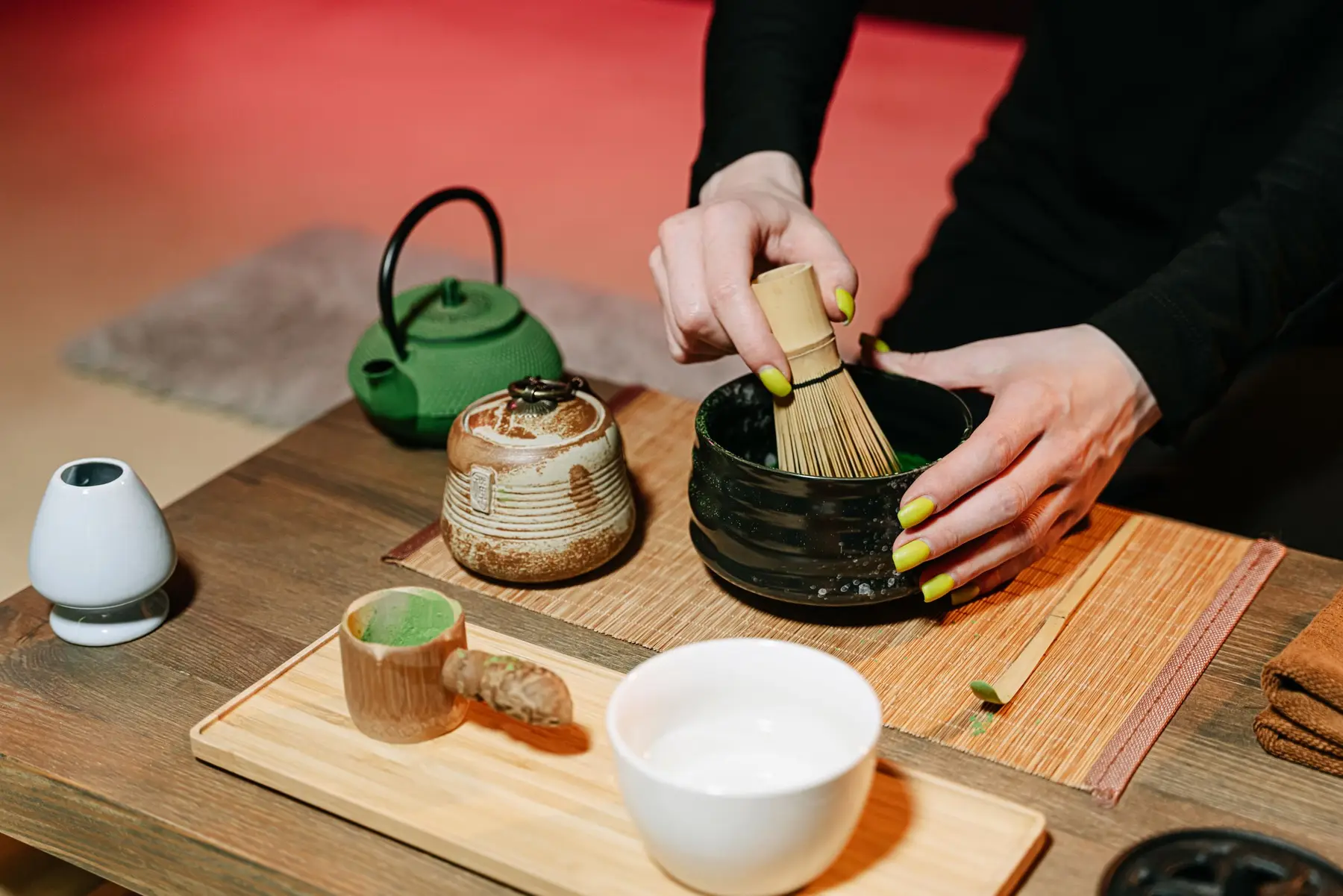
Cleveland Clinic explains that matcha is a type of green tea made by grinding special tea leaves into a fine powder. Both come from the same plant. With regular green tea, you steep the leaves and throw them away. With matcha, you drink the whole leaf. Cleveland Clinic says that gives you a higher amount of many plant nutrients.
Harvard Health adds that the plant used for matcha is shaded before harvest. That raises the levels of certain plant chemicals and antioxidants. You whisk the powder into hot water or warm milk. Harvard Health says about 1 teaspoon per cup of liquid.
Caffeine
Harvard Health lists the caffeine in one 8-ounce cup:
- Green tea: 23 to 49 milligrams
- Matcha: 38 to 89 milligrams
- Coffee: 100 to 120 milligrams
Cleveland Clinic, in an August 2026 article, says a serving of matcha can have about as much caffeine as a shot of espresso, depending on how it is made. That is much more than many other green or black teas. Matcha also has an amino acid called L-theanine, which may soften caffeine's jolt. Harvard Health says matcha's caffeine can make it harder to fall asleep, so try to have it earlier in the day.
If you are pregnant or nursing, Cleveland Clinic says to limit caffeine to 200 milligrams a day. Children under 12 should not have caffeine.
What about health benefits?
Harvard Health says catechins in green tea have been linked to lower blood pressure and lower LDL, the "bad" cholesterol. It also says matcha's plant chemicals may calm inflammation. But it stresses that more research in people is needed to back claims about heart health, thinking and more. The Harvard Chan School says matcha has been linked to better thinking in older women, healthy changes in gut bacteria and lower stress. Those are links, not proof. One heart finding came from an animal study.
A fair way to say it: green tea and matcha are healthy drinks that may offer extras. They are not cures.
The sugar trap
Cleveland Clinic warns that some matcha drinks at coffee shops have 20 to nearly 50 grams of sugar. It notes the American Heart Association suggests no more than 25 grams of added sugar a day for women and 36 grams for men. One cafe latte can use up your whole day. The Harvard Chan School also says to avoid added sugars and processed ingredients.
Easy ways to enjoy each
- Green tea: Cleveland Clinic suggests water at 160 to 180 degrees Fahrenheit and steeping for 1 to 3 minutes. Hotter water and longer steeping can make it bitter.
- Matcha: Whisk 1 teaspoon into hot water. Or stir it into oatmeal, yogurt or a banana smoothie, as Harvard Health suggests. Cleveland Clinic says dairy milk may lower some of matcha's antioxidant activity. Try water or a plant milk.
Safety notes
- Cleveland Clinic says matcha may lower the effect of atorvastatin, a cholesterol medicine. If you take it or other medicines, ask your doctor or pharmacist.
- Cleveland Clinic says moderation matters, even for matcha.
- Green tea extract pills are a different thing. Cleveland Clinic's dietitian does not recommend weight-loss supplements because they are not proven safe or effective.
So which one?
If you want a gentle cup, choose green tea. If you want a stronger, richer drink and you do well with caffeine, try matcha. Either way, skip the sugar syrup.