Weight loss · Plain answers
Does drinking more water help with weight loss?
Maybe a little. Here is what the research really says, and the easiest way to make water work for you.
HealthStylz Editors
· 3 min read
The short version
- Water is not a magic weight-loss trick.
- Swapping sugary drinks for water can help over time.
- Aim for pale yellow urine, not a number.
Metabolic Balance
Satiety Pacing & Metabolic Stability
Focusing on steady nourishment and fullness rather than restrictive diets or guilt.
- Satiety Fullness WindowHunger-free duration 4.5 hrs
- Blood Sugar SmoothingSteady energy curve 90/100
- Lean Muscle ProtectionActive tissue defense 92%
- Habit SustainabilityLong-term consistency 95/100
Source: American Journal of Clinical Nutrition & National Institutes of Health.
You have probably heard it. Drink more water and the weight will fall off. It sounds easy. But does it work? Let us look at what doctors and studies say.
Water before meals
Harvard Health looked at this in 2024. Here is what it found:
- Older adults who drank a full glass of water before meals tended to eat less.
- In a 12-week study, people on a low-calorie diet who drank extra water before meals felt less hungry. They also lost more weight.
That sounds good. But Harvard points out that neither study checked long-term weight loss. Many studies were small or short. Even the good ones showed only modest results. The doctor who wrote the article says the idea rests on a theory that does not hold up very well. He also did not find strong proof for the old idea that thirst feels like hunger. And recent studies did not show that water burns many calories.
Harvard's bottom line is kind, though. Drinking more water may help some people, and there is little downside.
The best trick: swap, do not just add
Here is where water does help. Harvard says that replacing high-calorie drinks with water can aid weight loss over time. Think sweetened soda, juice and alcohol. These drinks add calories without making you feel full. The evidence for this is indirect, and Harvard notes that sticking to only water can be hard. So start small. Swap one sugary drink a day.
The NHS gives some easy ideas too. Limit fruit juice and smoothies to one small glass a day, with a meal. Dilute squash or cordial to cut the sugar. Pick lower-fat milk or unsweetened plant milks. Tea and coffee also count toward your fluids.
How much should you drink?
There is no one number for everyone. The NHS says about 6 to 8 cups or glasses of fluid a day is a good guide. Cleveland Clinic suggests about 8 to 12 glasses of water. Both say your needs change with your age, health, activity and the weather. You may need more in the heat, when you are very active, when you are sick, or if you are pregnant or breastfeeding.
An easy check is your urine. The NHS says to aim for a light, clear yellow. Cleveland Clinic says dark urine and a dry mouth are signs you may need more fluids.
Tips that make it easier
- Keep a water bottle where you can see it.
- Drink a glass with each meal.
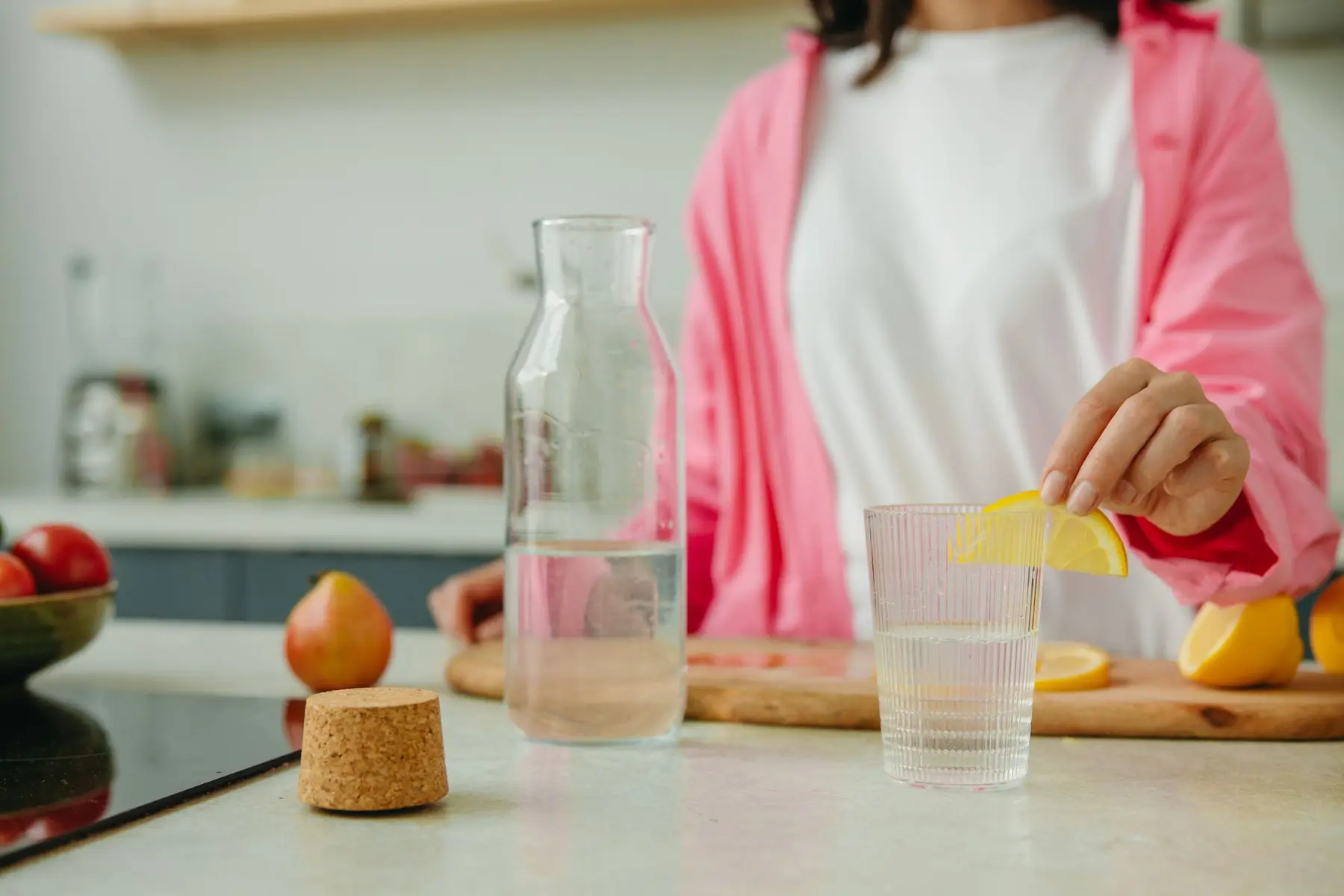
- Try cold water with lemon, cucumber slices or a few berries.
- Eat foods with lots of water, like fruit and vegetables. The NHS notes that some of your fluid comes from food.
- Drink when you feel thirsty.
One small thing to try
This week, trade one sweet drink a day for water. Drink a glass before dinner, too. See how you feel.
Check with your doctor first if you have kidney, heart or liver problems. You may be told to limit your fluids. Older adults can also feel less thirsty, so keep a glass handy.