Weight loss · Tips
Cottage cheese is back: easy high-protein ideas
Your grandmother's diet food is popular again. Here is why, and seven simple ways to eat it.
HealthStylz Editors
· 3 min read
The short version
- Cottage cheese is a great source of protein.
- Check the label. It can be high in salt.
- Blend it, bake it or top it. It is easy.
Metabolic Nutrition
Protein Pacing & Lean Mass Protection Profile
Adequate mealtime protein burns calories during digestion and protects calorie-burning muscle.
- Thermic Effect of FoodDigestive calorie burn +25% burn
- Satiety Hormone TriggerGLP-1 and PYY elevation 4.5 hrs full
- Active Muscle DefenseResting metabolic protection Saves muscle
- Ghrelin Hunger SuppressionAppetite suppression -30% ghrelin
Source: American Journal of Clinical Nutrition & Obesity Reviews.
Cottage cheese is having a comeback. You will see it in smoothies, pancakes and snack bowls all over the internet. In March, Cleveland Clinic wrote about the craze. Its dietitian called cottage cheese a great source of protein and said many patients like that it is minimally processed.
What is good about it
Protein is the big reason. Cleveland Clinic says a bit under a half cup of 2% cottage cheese has about 11 grams of protein. It also has some calcium. Protein can help you feel full, which is handy if you are watching your weight. Cleveland Clinic also says it has good bacteria that may support your gut.
Which kind should you buy?
The dietitians are not all the same on this. One Cleveland Clinic dietitian says there is no one best type. It is about what you like. Foods with more protein and fat can keep you fuller longer. Another says nonfat cottage cheese has less protein and may not be as filling. Full-fat has about 1.5 grams more saturated fat than 2%, so low-fat is a good middle choice.
Watch the salt
This is the main catch. Cleveland Clinic says cottage cheese can be high in sodium, which is salt. A 100-gram serving has about 321 milligrams, or 14 percent of the daily value. It advises choosing low-sodium or sodium-free versions. This matters most if you have high blood pressure or heart disease.
Seven easy ideas
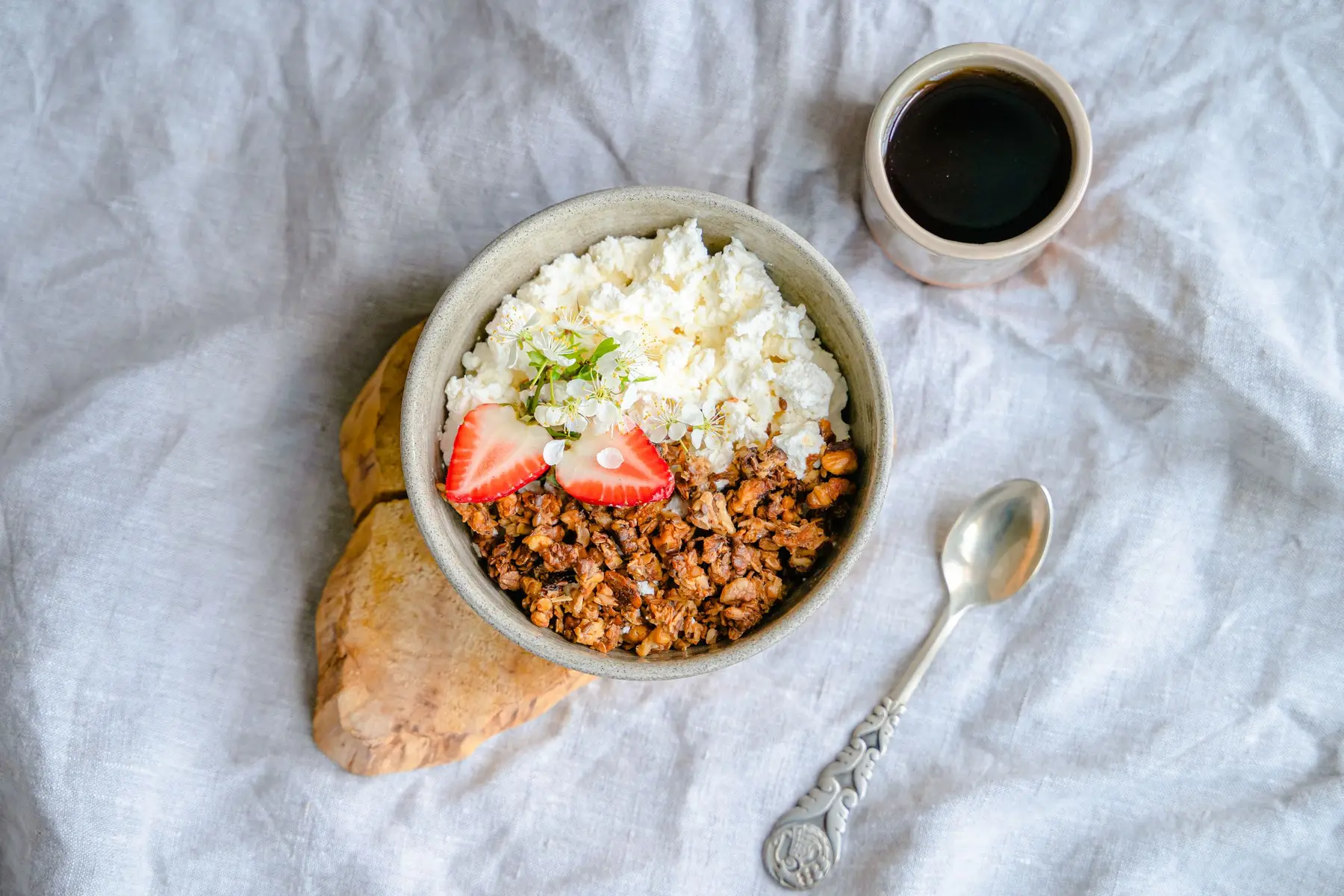
- Berry bowl. A half cup with berries and a handful of nuts. Cleveland Clinic suggests this for breakfast.
- Smoothie. Blend it with a banana and milk. Whipping or blending makes it creamy.
- Pancakes. Mix some into your batter.
- Scrambled eggs. Stir a spoonful in near the end for a softer scramble.
- Dip. Blend with herbs and serve with carrot sticks and cucumber.
- Savory toast. Spread on whole-grain toast and add sliced tomato.
- Sour cream swap. Use it on baked potatoes or tacos instead of sour cream. Cleveland Clinic suggests it as a stand-in for sour cream or ricotta.
Not a fan of the lumps?
Many people feel that way. You do not have to eat it straight from the tub. Blend it smooth in a blender or food processor. Then it works like a thick cream in dips, sauces and smoothies, and the lumpy look disappears. Kids often accept it this way too.
Skip the sugar trap
Cleveland Clinic says to be careful with pre-packed cups that come with fruit. They can have added sugar. If you are managing blood sugar, check the label. Buy plain and add your own fruit.
Keep it fresh and simple
Buy a small tub first, so you can see if your family likes it. Keep it cold, and use it up before the date on the lid. Pair it with fruit, vegetables or whole grains, so you get fiber and not just protein.
One small thing to try
Buy one tub of low-sodium cottage cheese this week. Try it on toast with tomato on Monday, then in a berry bowl on Wednesday. See which you like.
If you are lactose intolerant or sensitive to casein, a milk protein, be careful. Cleveland Clinic says cottage cheese may upset your stomach. Lactose-free versions are available. Check with your doctor if you have high blood pressure or heart disease.