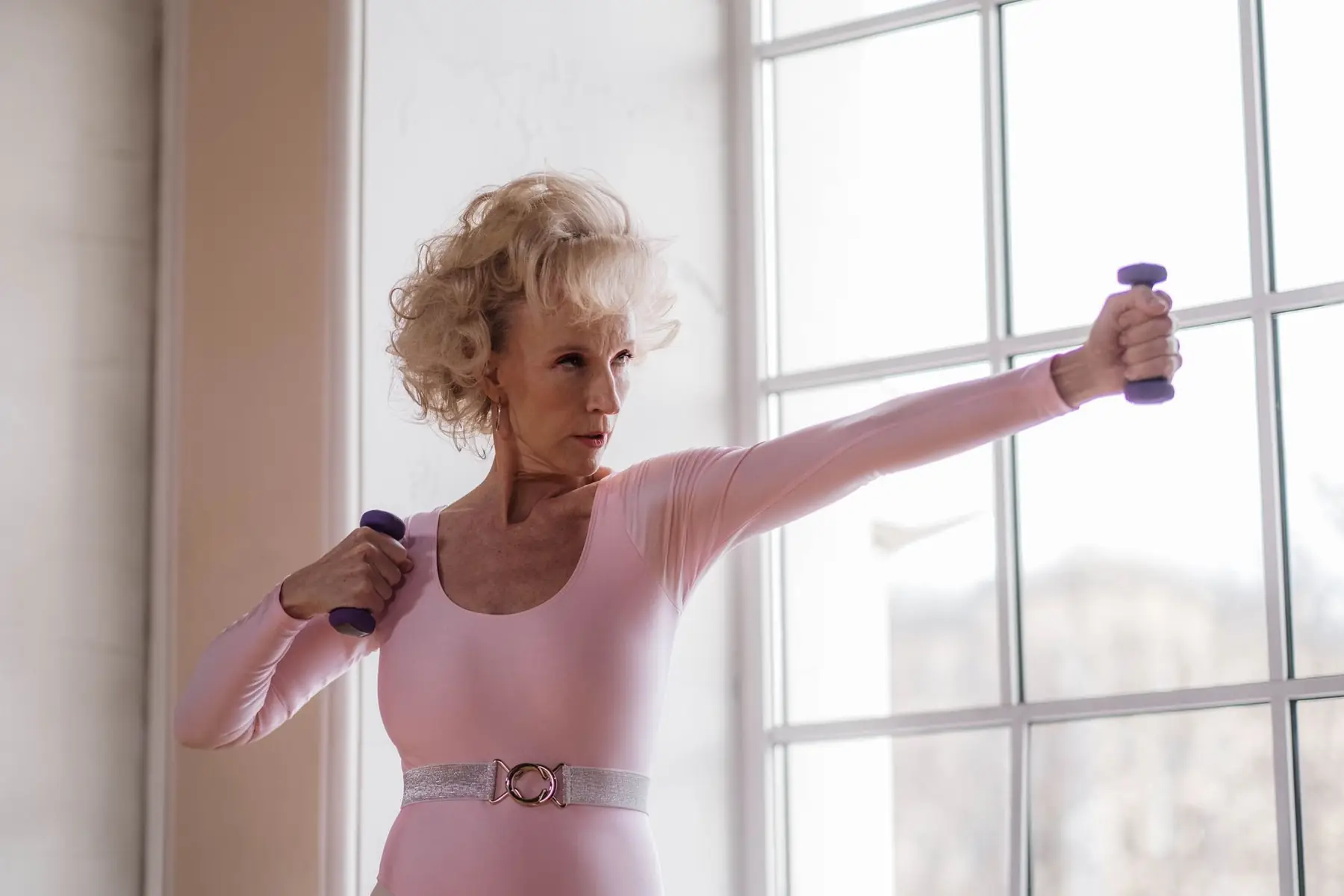
Healthy aging · Routine
Chair Yoga for Older Adults: 8 Gentle Moves
Stay flexible and strong from a sturdy chair. Slow, easy moves you can do in the living room.
HealthStylz Editors
· 4 min read
The short version
- A chair gives you support and confidence.
- Start small and add reps slowly over time.
- Aim for at least two sessions each week.
Nutrition facts
Foods that help keep bones strong. One normal serving of each.
Fiber per serving
- Milk1 cup whole (244 g)0 g
- Kale1 cup raw (21 g)0.9 g
- Almonds1 oz, about 23 almonds (28 g)3.5 g
- Salmon3 oz raw (85 g)0 g
- Greek yogurt1 container, 7 oz (200 g)0 g
Protein per serving
- Milk1 cup whole (244 g)7.7 g
- Kale1 cup raw (21 g)0.6 g
- Almonds1 oz, about 23 almonds (28 g)5.9 g
- Salmon3 oz raw (85 g)17.4 g
- Greek yogurt1 container, 7 oz (200 g)19.9 g
Calories per serving
- Milk1 cup whole (244 g)148.8 cal
- Kale1 cup raw (21 g)7.4 cal
- Almonds1 oz, about 23 almonds (28 g)162.1 cal
- Salmon3 oz raw (85 g)176.8 cal
- Greek yogurt1 container, 7 oz (200 g)146 cal
Source: USDA FoodData Central.
You do not have to get down on the floor to move well. A sturdy chair can be your yoga mat. These moves are slow and gentle. They stretch tight spots, wake up your legs and help you feel steady.
The moves below come from the NHS (the UK health service) guidance on sitting exercises, flexibility and strength. Do them with slow, calm breathing, the way you would in a yoga class.
Why keep moving
The CDC says adults 65 and older need at least 150 minutes of moderate activity a week. That can be 30 minutes a day, 5 days a week. You also need activities that strengthen muscles on at least 2 days a week, plus activities that improve balance. The CDC adds that physical activity can help prevent or delay many age-related health problems and help you stay independent.
If you cannot reach the full amount, that is okay. The CDC says some physical activity is better than none at all. Be as active as your abilities and health allow.
Set up your chair
- Pick a solid, stable chair with no wheels. A chair without arms gives you more room to move.
- Sit with your feet flat on the floor and your knees bent about like the corner of a square.
- Wear loose, comfortable clothes.
- Keep a glass of water nearby.
How to do the routine
Start gently. The NHS says to build up slowly and add repetitions little by little. Try to do these at least twice a week. A repetition, or rep, is one time through a move.
Move slowly and with control. Breathe in as you get ready. Breathe out as you stretch or lift. Stop if anything hurts.
Stay safe
The National Center for Complementary and Integrative Health notes that yoga is generally safe for healthy people. It also says emergency room visits for yoga injuries are more common among people 65 and older. So take extra care and go slowly.
Check with your doctor or another health professional first if you are not sure these moves suit you. This is especially true if you have a medical condition, joint pain, dizziness or balance problems.
Make it a habit
Pick a time you already sit down, like after breakfast or during the morning news. Do two or three moves at first. Add a few more each week. In a month, you may be doing the whole routine.
Many people like to do it with a friend or a family member. It is more fun that way. It is also a nice way to check in with each other.
What each move does
The NHS explains the point of each one. The chest stretch helps your posture. The upper-body twist works the flexibility of your upper back. Hip marching builds hip and thigh strength. The ankle stretch keeps your ankles loose. The neck moves help your neck turn more easily. Sit to stand and arm curls build strength in your legs and arms.
Together, they cover stretching, strength and posture in one short session.
The moves
- Chest stretch Hold 5 to 10 seconds, repeat 5 times
Sit tall, away from the chair back. Draw your shoulders back and down and open your arms out to the sides. Push your chest forward and up until you feel a stretch across it.
- Upper-body twist Hold 5 seconds, 5 times each side
Sit with your feet flat. Cross your arms and hold your shoulders. Keep your hips still and turn your upper body to the left as far as feels comfortable. Come back and turn to the right.
- Neck turn Hold 5 seconds, 3 times each side
Sit tall with relaxed shoulders and look straight ahead. Slowly turn your head toward one shoulder, only as far as is comfortable. Return to the center, then turn the other way.
- Neck stretch Hold 5 seconds, 3 times each side
Sit tall and look ahead. Hold one shoulder down with the opposite hand. Slowly tilt your head away from that shoulder. Switch sides.
- Hip marching 5 lifts each leg
Sit upright without leaning on the backrest and hold the sides of the chair. Lift one bent knee as high as is comfortable. Lower the foot slowly. Switch legs.
- Ankle stretch 2 sets of 5 stretches each foot
Hold the side of the chair and straighten one leg so your foot is off the floor. Point your toes away from you, then pull them back toward you. Switch feet.
- Sit to stand 5 slow reps
Sit near the front edge of the chair with your feet hip-width apart. Lean a little forward. Stand up using your legs, not your arms. Sit back down slowly. Use your hands only to guide you if you need to.
- Seated arm curls 3 sets of 5 curls each arm
Hold a light weight in each hand. A filled water bottle works well. Let your arms hang at your sides. Bend your elbows to bring the weights toward your shoulders, then lower them slowly.
Stop if anything hurts. If you have a health condition or are new to exercise, check with your doctor first.